164 posts
- 2233D Gaussian Splatting vs Unreal Engine: Two Ways to Build a 3D World — and Where Each One Ships
- 222LLMs Inside Unreal Engine: The New Skills Game Developers Need in 2026
- 220Living With Claude Fable 5: How the Most Capable Model Changes the Way You Actually Work
- 219Luma's Bet: From Video Generator to a Single Model That Thinks in Pixels
- 215The Best AI Video Models in 2026: Types, Differences, and Where This Is All Going
Luma's Bet: From Video Generator to a Single Model That Thinks in Pixels
Most AI companies pick a lane and stay in it. Luma keeps changing lanes — and somehow keeps winning. It began as a phone app that turned a walk around your couch into a 3D model. It became one of the few AI video generators good enough that real studios use it. And in 2026 it is making the biggest bet of all: that the future is not a video model or an image model, but a single model that understands and renders everything at once. This is a short map of how Luma got here and what it is actually shipping right now.

Ray3: the model that made people take Luma seriously
The turning point was Ray3, launched in September 2025 and billed as "the world's first reasoning video model." That phrase sounds like marketing until you see what it changes. Older video models work like a slot machine: you write a prompt, pull the lever, and hope. Ray3 added a reasoning layer that generates text tokens and visual tokens together, evaluates its own output, and revises before the final render. The result is far better instruction-following and temporal coherence — characters, motion, and physics that stay consistent across a shot instead of melting halfway through.
The other headline was native HDR. Ray3 was the first generative video model to write directly to professional 10-, 12-, and 16-bit high dynamic range in the ACES2065-1 EXR format — the same pipeline high-end colorists and VFX artists actually grade in. That single detail is why Adobe put Ray3 inside Firefly and Premiere Pro on day one: it slots into a real production workflow rather than sitting beside it. A Draft Mode rounds it out, letting you explore ideas up to 10× faster and cheaper before promoting a draft to a full-quality render while keeping its identity, motion, and composition.
Then they made it cheap and fast
A great model nobody can afford to run at volume is a demo, not a business. So Luma spent the months after launch driving cost down. Ray3.14, in January 2026, pushed native resolution to 1080p while landing roughly three times cheaper and four times faster than the original Ray3 — without giving up the reasoning or HDR pipeline. The current production line, Ray3.2, continues that curve. This is the unglamorous work that separates a research lab from a product company: not just being good, but being good at a price that lets marketing teams generate hundreds of clips a week.
Uni-1: the actual bet
Here is where Luma stops following the field and tries to leap past it. In March 2026 it launched Uni-1, the first model in what it calls the "Unified Intelligence" family — trained jointly on audio, video, image, language, and spatial reasoning. The pitch from CEO Amit Jain is deceptively simple: the model can "think in language and imagine and render in pixels or images … intelligence in pixels." There is no handoff between a text model that plans and an image model that draws. Reasoning and rendering happen in the same forward pass.
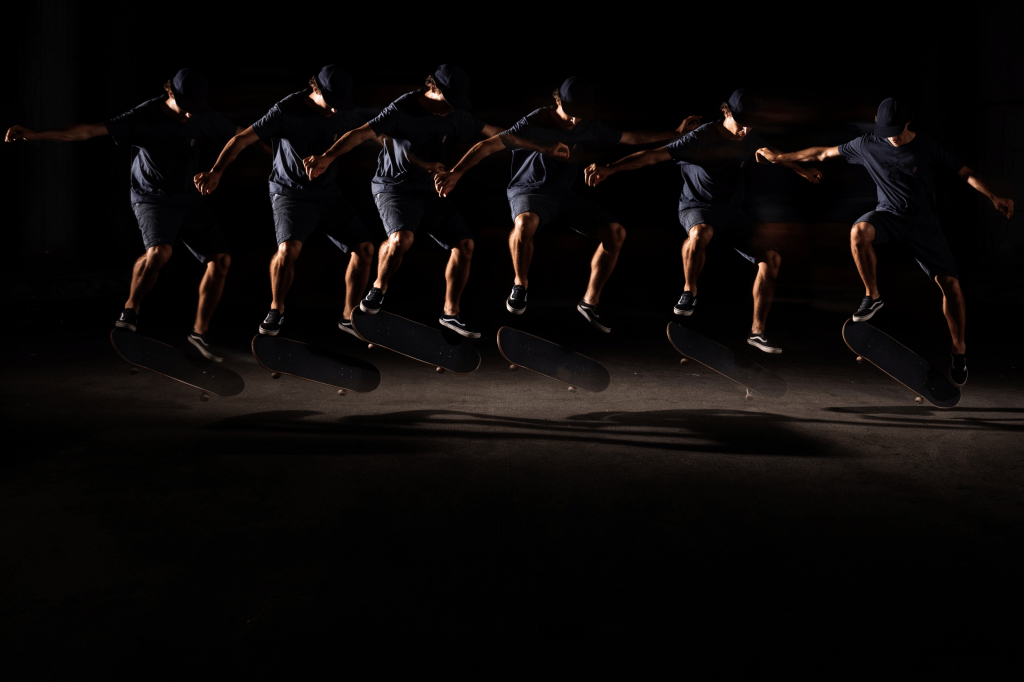
Why does that matter? Because it unlocks self-critique. Since Uni-1 both understands and generates, it can look at its own output, judge whether it matches the instruction, find where it falls short, and iterate — without a human in the loop. Luma claims Uni-1 outscores comparable models from Google and OpenAI on its benchmarks while costing up to 30% less. Benchmarks are always self-flattering, so take the exact numbers with salt; the architectural idea is the real story.
From model to agent
Uni-1 is the engine. Luma Agents, launched alongside it, are the car. These are creative AI agents meant to carry a whole project end to end across text, image, video, and audio — not "generate one clip" but "produce the campaign." Jain's framing is pointed: "Creative teams shouldn't have to spend their time orchestrating tools. They should spend it creating." The newer Uni-1 brand layer carries style references, character references, and visual grounding into every asset, so output stays on-brand across an entire project instead of drifting shot to shot.
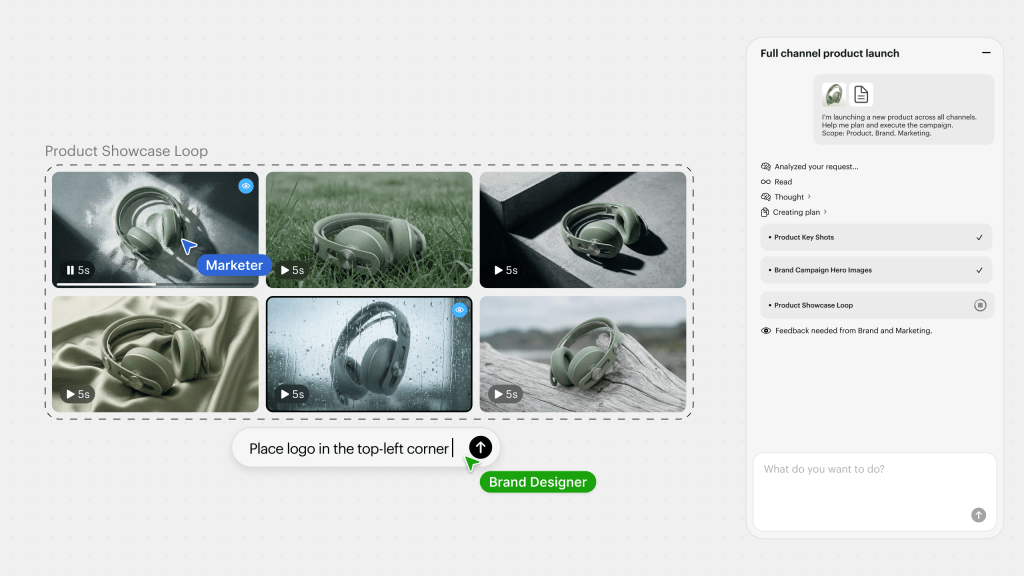
The early customer list is the tell that this is more than a tech demo: Publicis Groupe, Serviceplan, Adidas, Mazda, and HUMAIN. As Jain put it, "our customers aren't buying the tool; they're redoing how business is done." That is the line between a creative toy and a creative platform.
The money and the why
None of this is cheap to build, which is why the November 2025 funding round matters. Luma raised a $900 million Series C led by HUMAIN — an arm of Saudi Arabia's Public Investment Fund — valuing the company at roughly $4 billion, with AWS and AMD Ventures also in. It was one of the largest AI rounds of the year, and it buys the thing unified models are most hungry for: compute. The strategic logic is that whoever owns the model that can both reason and render owns far more of the creative stack than a point-solution video tool ever could.
Where this is heading
Luma's longer ambition isn't really video at all — it's a world model, a system that understands how the visual world behaves well enough to generate, edit, and reason about it the way a person would. Ray3 proved the company can ship a frontier model. The cost cuts proved it can run one as a business. Uni-1 and Agents are the wager that the next phase belongs to single models that collapse the old pipeline of "plan in text, draw in pixels" into one act of intelligence.
The risk is obvious: Google, OpenAI, and well-funded video specialists are all chasing the same prize, and "unified" is easy to claim and hard to prove at production quality. But Luma has done the rare thing of being early, being good, and being affordable in the same product. In a field where most companies manage one of those, that is worth watching closely.
Sources: BusinessWire — Luma Launches Ray3, TechCrunch — Luma launches creative AI agents (Uni-1), VentureBeat — Uni-1, CineD — Ray3 HDR in Adobe Firefly, CNBC — Disruptor 50.
Comments
No comments yet. Be the first!