The Duolingo Founder Story: Luis von Ahn, a Green Owl, and the Plan to Make Education Free
7minThe Midjourney Founder Story: David Holz, the Company That Took No VC Money, and the $500M Bootstrap
5minThe Figma Founder Story: Drones, a Meme Generator, and the $20 Billion Deal That Got Blocked
5minThe Spotify Founder Story: How Daniel Ek Beat Free Music by Being Faster Than Theft
7minThe Stripe Founder Story: Two Brothers From Limerick and Seven Lines of Code
5minThe Duolingo Founder Story: Luis von Ahn, a Green Owl, and the Plan to Make Education Free
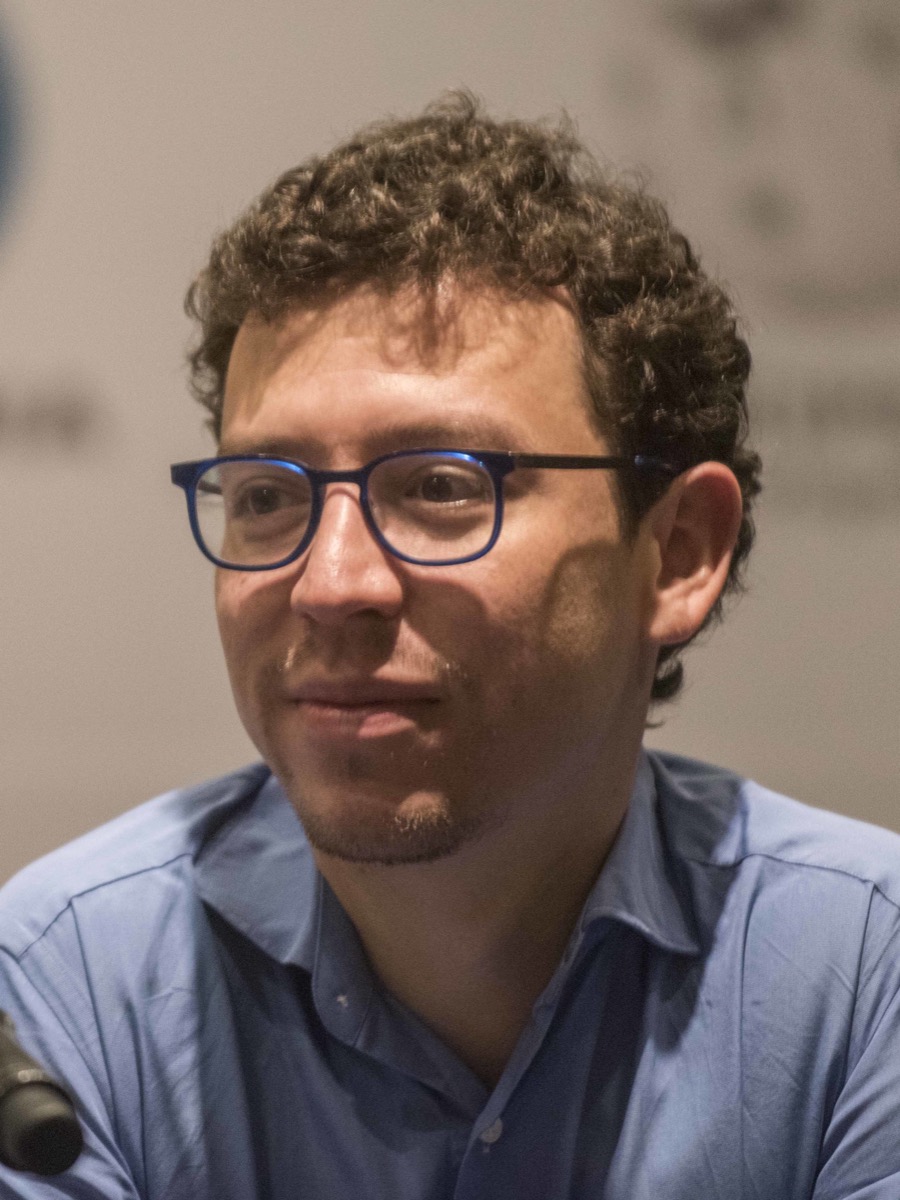
Most founder stories start with a person who wanted to build a company. Luis von Ahn's starts with a person who kept accidentally inventing billion-dollar ideas and giving them away. By the time he was in his early thirties he had already coined the word CAPTCHA, sold a company to Google, and won a MacArthur "genius" grant. He could have done almost anything. What he chose to do was go back to a problem he had carried since he was a kid in Guatemala City: that a good education is one of the few things money can reliably buy — and that this is deeply unfair. Duolingo is his attempt to break that link.
Growing up where English was a luxury good
Von Ahn was born in Guatemala City in 1978. His mother, a doctor, raised him largely on her own and spent what she had on his schooling. Two things from that childhood shaped Duolingo more than any business school lesson ever could. The first was a Commodore 64 his mother bought him when he was eight — he had asked for a Nintendo, got a computer instead, and fell in love with it. The second was watching, up close, how learning English worked in Guatemala: it was expensive, it was gated behind money, and the people who could afford it pulled steadily ahead of everyone who couldn't. Education wasn't a ladder for everyone. It was a ladder for people who already had money.
That observation sat quietly for two decades before it became a company.
The man who turned wasted attention into work
Von Ahn came to the United States for college, earning a math degree from Duke and then a PhD in computer science at Carnegie Mellon under Manuel Blum. His research obsession was unusual and, in hindsight, perfectly aimed at what came next: human computation — the idea that the small scraps of attention humans spend on tiny tasks could be pooled into something enormous.
His first famous invention came from a request by Yahoo, which was drowning in bots signing up for fake accounts. Von Ahn and his collaborators built the squiggly-text test that proves you are a person. They called it CAPTCHA. It worked — and then von Ahn did the math on it. Hundreds of millions of people were typing those distorted words every day, each spending about ten seconds. That was hundreds of thousands of human hours a day being spent to prove a point and then thrown away.
So he built reCAPTCHA: the same test, except now the words you typed were scanned from old books and newspapers that computers couldn't read. Every time you proved you were human, you also digitized a word of the archive of The New York Times or a page of a century-old book. Human effort that had been pure waste was now doing real work, invisibly, at planetary scale. Google acquired reCAPTCHA in 2009. Von Ahn had, by then, also sold an earlier game-based project and picked up a MacArthur Fellowship in 2006. He was 30, wealthy, and decorated.
Two people who agreed education should be free
Back at Carnegie Mellon, von Ahn met a PhD student named Severin Hacker, a Swiss engineer who had grown up about as differently from von Ahn as possible — comfortable, in one of the richest countries on earth. And yet the two of them landed on exactly the same conviction: education should be free. Hacker put it bluntly — free education, or nothing.
They picked language learning as the wedge for a few practical reasons. Roughly a billion people were trying to learn a language, most of them to learn English, and most of them doing it precisely to get a better job or a better life — the same escalator von Ahn had watched in Guatemala. Language learning was also something you could break into small, testable, gamifiable pieces. And crucially, it was measurable: you either understood the sentence or you didn't.
They founded Duolingo in 2011 and opened it to the public in 2012. The pitch was almost suspiciously simple: a genuinely good language course, on your phone, for free — no paywall on the actual learning.
The uncomfortable question: how do you make money giving education away?
The original monetization idea was pure von Ahn: crowdsourced translation. Learners would practice by translating real sentences from the web, and companies like CNN and BuzzFeed would pay for the translated content. It was elegant — human computation again, education paying for itself through the learning itself. It also, eventually, didn't scale into a real business, and Duolingo quietly retired it.
What actually worked was less clever and more durable: freemium. The core lessons stayed free, supported by ads, and a subscription (now Super Duolingo) removed the ads and added features. Then came the sleeper hit — the Duolingo English Test, an online, on-demand English proficiency exam accepted by thousands of universities, at a fraction of the cost of sitting for a traditional test at a testing center. For a student in Guatemala, or Vietnam, or Nigeria, that price difference is the entire point. The mission and the revenue line, for once, pointed the same direction.
The owl that guilt-trips you into learning
Duolingo's real product genius isn't linguistics — it's behavior. The company borrowed the machinery of mobile games and pointed it at studying: streaks you're terrified to break, XP, leagues, hearts, and a cast of characters led by Duo, a green owl who has become one of the most recognizable mascots on the internet. The famous "passive-aggressive owl" notifications — nagging you to do your lesson before your streak dies — started half as a joke and became a genuine growth engine, later amplified by a marketing team that leaned all the way into the meme on TikTok.
Underneath the jokes is a serious idea von Ahn repeats often: the competition isn't other language apps. It's your phone itself — Instagram, TikTok, games. To teach people at scale, a free app has to be as compelling as the things designed to waste their time. Duolingo's answer was to make studying feel like one of those things, and then quietly point that pull at something useful.
From a Pittsburgh office to a Nasdaq listing
The gamble worked at a scale that's easy to state and hard to absorb. Duolingo grew to hundreds of millions of registered learners and, by the 2020s, tens of millions of people using it every single day — most of them, still, for free. In July 2021 the company went public on Nasdaq under the ticker DUOL, turning the "free education" idealists into the founders of a multi-billion-dollar public company. More recently von Ahn has pushed hard into AI — features that let learners practice conversations and get explanations from a model — while insisting the mission is unchanged: the best education in the world, available to anyone, for free.
What the story is actually about
It's tempting to file Duolingo under "gamification wins" and move on. But the throughline of von Ahn's career is stranger and more specific than that. Every big thing he built — CAPTCHA, reCAPTCHA, Duolingo — is the same move: take a vast amount of ordinary human attention that would otherwise be wasted, and quietly convert it into something valuable. With reCAPTCHA that value went to Google's book archive. With Duolingo it goes back to the person doing the tapping, in the form of a language they couldn't otherwise afford to learn.
The kid in Guatemala City who wanted a Nintendo and got a computer noticed early that education was a wall between the people who had money and the people who didn't. He spent his career figuring out how to charge the wall to attention instead of cash — and then aimed that trick at the exact inequality he'd grown up inside. That's the whole story, and it's why the green owl won't stop texting you.