Elon Musk's X Money Says It Will Pay You 6% on Savings. Is It Too Good to Be True?
4minCommercial Real Estate Investing: The Complete Guide
10minSamsung vs SK Hynix: the HBM battle that will decide Korea's AI chip future
3minThe end of jeonse and what it means for renters in Korea
3minTSMC and the AI chip bottleneck Wall Street can't price correctly
3minSamsung vs SK Hynix: the HBM battle that will decide Korea's AI chip future
For most of Samsung Electronics' history, its dominance in memory chips was so complete that the question wasn't whether Samsung would be the market leader — it was by how much. That picture has shifted meaningfully in the AI era, and the shift centers on a single product category: HBM (High Bandwidth Memory).
AI data centers run on GPUs. GPUs need enormous amounts of memory bandwidth to run large model training and inference workloads. Standard DRAM — the kind that goes in your laptop — can't deliver that bandwidth at the required density. HBM stacks memory dies vertically, connects them through silicon, and delivers bandwidth measured in terabytes per second. Every Nvidia H100 and H200 in every AI cluster in the world uses HBM. And right now, the company making most of that HBM is not Samsung — it's SK Hynix.
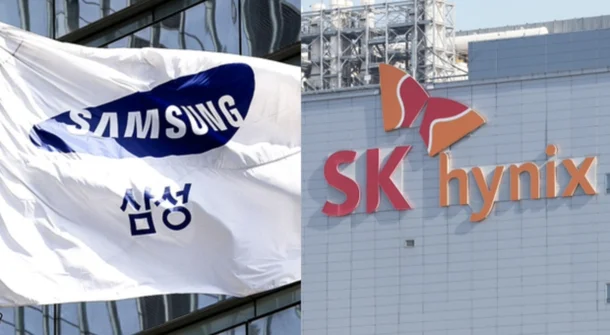
How SK Hynix got ahead
SK Hynix was early and aggressive on HBM3E, the current generation of high-bandwidth memory used in Nvidia's most advanced AI accelerators. More importantly, it passed Nvidia's qualification process first — a rigorous gate that tests not just performance but yield, consistency, and thermal behavior under sustained AI workloads. Being first through that gate effectively meant SK Hynix secured the primary supply relationship with Nvidia for the current product cycle.
In a market where Nvidia controls the hardware that defines AI infrastructure, being Nvidia's memory supplier of choice is one of the most valuable supply chain positions in technology.
Samsung's HBM3E chips faced reported issues with heat generation and yield consistency that slowed its qualification timeline. The company found itself in the unusual position of being a second-tier supplier in a market it had historically led by a wide margin. For investors watching Samsung Electronics (005930.KS) on KOSPI, this created a visible drag on earnings expectations at exactly the moment AI hardware demand was accelerating.
Where Samsung stands now
Samsung has reportedly made progress toward qualifying its 12-layer HBM3E chips with Nvidia, and it continues to supply HBM to other customers — including Google and AMD — at meaningful volumes. The company's scale, manufacturing capacity, and R&D investment in next-generation HBM4 are substantial. It is not out of the race. But catching SK Hynix in the current cycle is unlikely; the contest now is about who leads the next generation.
The stock market has already priced in much of this tension. Samsung's semiconductor division has underperformed expectations in an environment where its main rival has been growing share in the highest-margin AI memory products. The share price has reflected that gap. The question for investors holding Samsung is whether the qualification catch-up, combined with Samsung's foundry business and diversified electronics portfolio, represents a reasonable entry at current prices — or whether the structural disadvantage in HBM takes longer to close than the market assumes.
Why this matters beyond the two companies
HBM supply is a constraint on how fast AI infrastructure can scale. If Samsung returns to full competition with SK Hynix in HBM, overall supply increases and the bottleneck loosens. If it doesn't, SK Hynix will continue to capture disproportionate value from the AI buildout, and Samsung's semiconductor profitability — and KOSPI's largest component — will reflect that for multiple quarters ahead.
For anyone watching Korean equities as an AI proxy, the HBM qualification story is more important than any quarterly earnings release. It defines the structural revenue trajectory of both companies for the next product cycle.
This article is for informational purposes only and is not investment advice.