Elon Musk's X Money Says It Will Pay You 6% on Savings. Is It Too Good to Be True?
4minCommercial Real Estate Investing: The Complete Guide
10minSamsung vs SK Hynix: the HBM battle that will decide Korea's AI chip future
3minThe end of jeonse and what it means for renters in Korea
3minTSMC and the AI chip bottleneck Wall Street can't price correctly
3minTSMC and the AI chip bottleneck Wall Street can't price correctly
Every major AI model — every GPU that trains it, every accelerator that runs inference on it — runs on chips that only TSMC knows how to make at scale. That's not a marketing claim. It's a supply chain fact that shapes the competitive dynamics of the entire AI industry, and it's poorly understood by most people watching AI stocks.
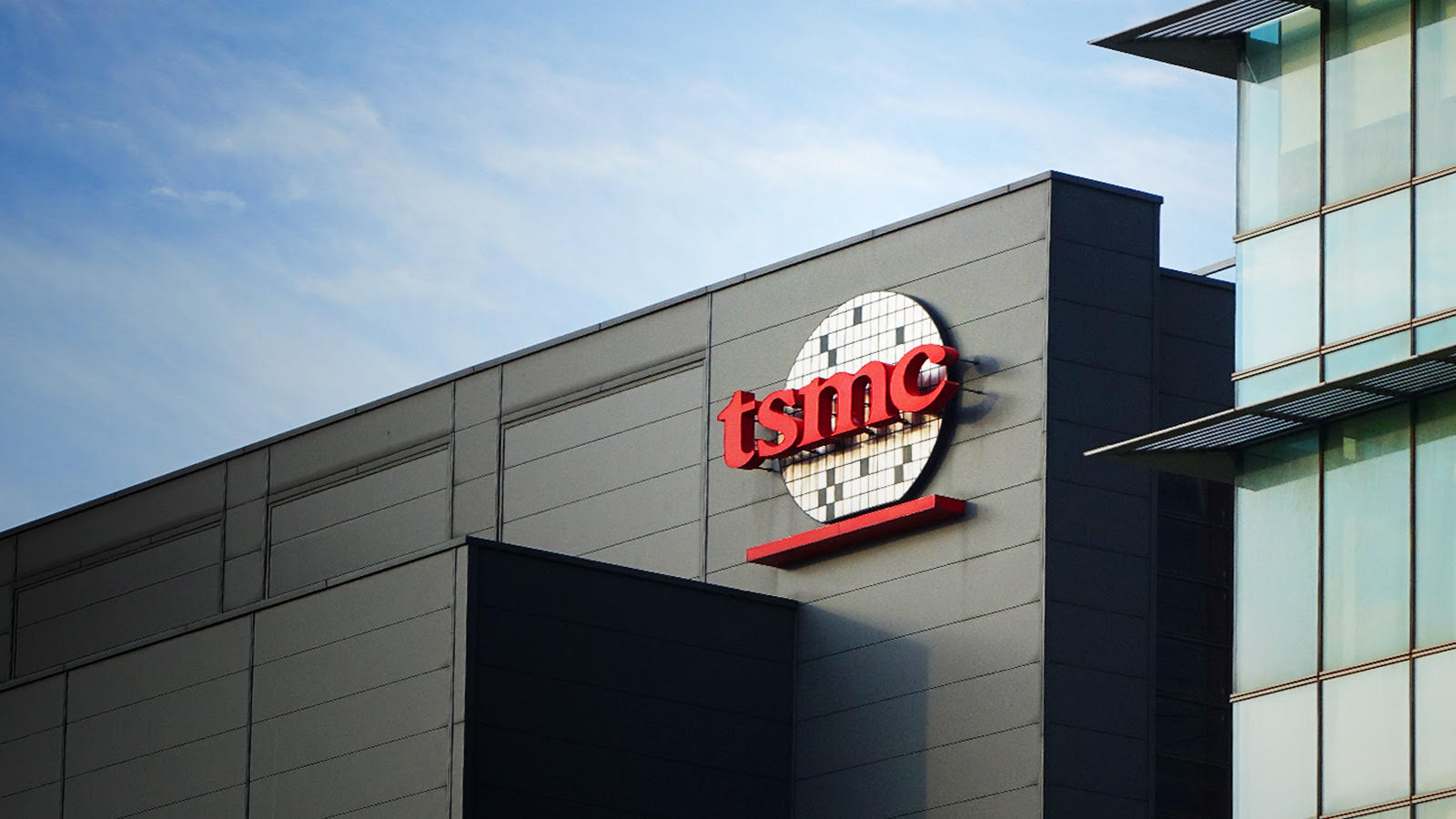
What TSMC actually does
TSMC is a pure-play foundry: it designs nothing and makes everything. Nvidia, AMD, Apple, Qualcomm, and dozens of others design their chips and hand the manufacturing to TSMC. The company's advantage is process technology — the ability to reliably manufacture transistors at extremely small dimensions, which translates directly into chips that are faster, more power-efficient, and denser than what competitors can produce.
At the leading edge — the 3nm and 2nm nodes where AI accelerators now live — TSMC has no peer in volume manufacturing. Samsung has comparable processes on paper; their yields and customer confidence have not matched TSMC's in practice. Intel Foundry is building toward the same capability and remains years behind in external customer adoption. That gap is TSMC's moat, and it has held for longer than most analysts predicted it would.
The AI demand signal
Training large language models requires enormous clusters of high-end GPUs running continuously. Every expansion of those clusters — whether at hyperscalers like Google, Microsoft, or Amazon, or at newer AI companies — flows through Nvidia's order books and then through TSMC's fabs. When Nvidia reports blowout GPU demand, the underlying story is TSMC's fab capacity filling with AI workloads.
The AI arms race has a single chokepoint. It's a 70-year-old company founded in Taiwan that most retail investors couldn't locate on a map two years ago.
CoWoS — TSMC's advanced packaging technology that stacks memory directly onto logic chips — has been a specific constraint. HBM memory from SK Hynix and Micron is bonded to Nvidia's H100 and H200 chips through TSMC's packaging lines. Demand for CoWoS capacity has exceeded supply for most of 2024 and into 2025, creating lead times that constrain even Nvidia's ability to ship.
The geopolitical risk that doesn't go away
TSMC's concentration in Taiwan is both the source of its competitive advantage and the most discussed risk in global technology investing. The physical infrastructure — the fabs, the equipment, the engineering talent — took decades to assemble in Hsinchu and Tainan. TSMC's Arizona and Japan expansions are real and progressing, but they represent a fraction of total capacity and come at materially higher cost per wafer.
The investment question isn't whether the geopolitical risk exists — it clearly does — but whether it's already priced into TSMC's valuation relative to the structural demand tailwind from AI. Historically, TSMC has traded at a discount to its US semiconductor peers partly because of that risk. Whether that discount is still rational given the scale of AI infrastructure spending is the argument both sides of the trade are making.
For anyone investing in AI as a theme, TSMC is the one company in the supply chain that the entire thesis depends on. That doesn't make it a certain investment. It makes it impossible to ignore.
This article is for informational purposes only and is not investment advice.