The Duolingo Founder Story: Luis von Ahn, a Green Owl, and the Plan to Make Education Free
7minThe Midjourney Founder Story: David Holz, the Company That Took No VC Money, and the $500M Bootstrap
5minThe Figma Founder Story: Drones, a Meme Generator, and the $20 Billion Deal That Got Blocked
5minThe Spotify Founder Story: How Daniel Ek Beat Free Music by Being Faster Than Theft
7minThe Stripe Founder Story: Two Brothers From Limerick and Seven Lines of Code
5minThe Midjourney Founder Story: David Holz, the Company That Took No VC Money, and the $500M Bootstrap
Most AI companies you have heard of share a shape: raise an enormous round, hire fast, burn cash chasing scale, raise again. Midjourney is the conspicuous exception. It has never taken a dollar of venture capital. It runs on a team of roughly 40 people. It reached an estimated $500 million in annualized revenue by 2025 — while its founder still ships product from a Discord server. What makes that possible is not a growth hack. It is that David Holz had already spent nine years learning, expensively, exactly how not to build a company.
A dentist's sailboat and a rocket-launching hack
Holz grew up in Fort Lauderdale, Florida. His father was a dentist with an unusual practice — a dental office on a sailboat that he'd take around the Caribbean to reach patients. Holz learned to code young, starting in Scheme, but by his own account he wasn't truly hooked until he figured out he could hack the game Star Wars: Jedi Knight — Dark Forces II to make his character shoot rockets out of his hands. That is a very on-brand origin for someone who would later build a tool that lets anyone conjure impossible images by typing a sentence.
He studied math and physics at the University of North Carolina at Chapel Hill, did research at NASA and the Max Planck Institute, and was, on paper, headed for a career in science. Instead he went into hardware.
Leap Motion: the expensive nine-year lesson
In 2010, Holz co-founded Leap Motion with Michael Buckwald. The idea was genuinely futuristic: a small sensor that tracked your hands and fingers in the air with sub-millimeter precision, so you could control a computer without touching it. The demos were mesmerizing, the press was breathless, and the money followed — Leap Motion raised more than $94 million and hit a peak valuation around $306 million in 2013 when the first controller shipped.
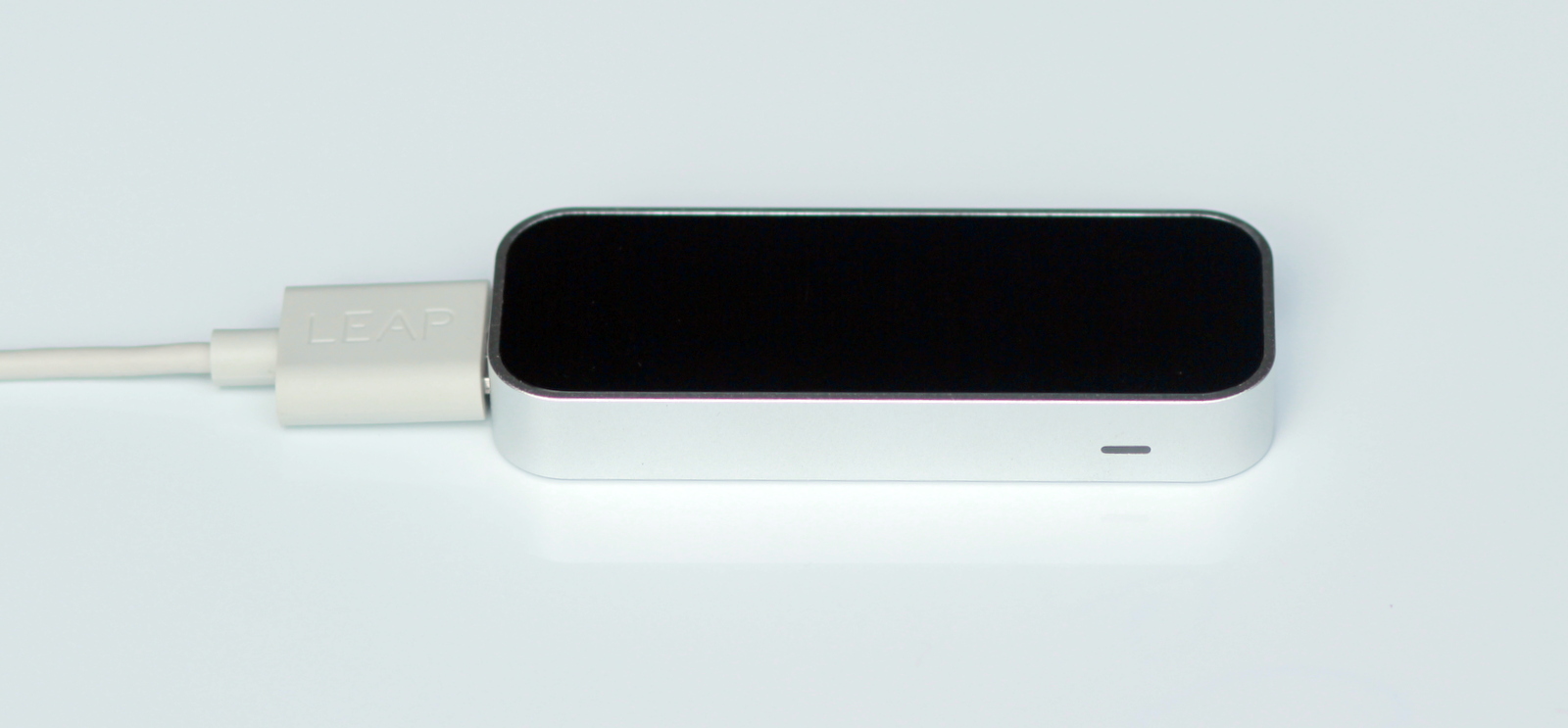
And then it didn't work — not technically, but as a business. The hardware was magical for thirty seconds and tiring to use for thirty minutes. There was no killer application. Holz had raised a mountain of venture money against a vision the market wasn't ready to buy, and the years that followed were a grind of pivots — VR, enterprise, licensing — chasing a return that never fully materialized. In 2019 the company was absorbed by Ultrahaptics (now Ultraleap) in a deal valuing it at roughly $30 million, about a tenth of its 2013 peak. Nine years of work, tens of millions of dollars, and a modest exit.
Most founders would file that as a painful near-miss. Holz filed it as data. His conclusion was blunt and it became the design principle for everything after: taking large amounts of venture capital forces you into a cycle of burning money and raising more to justify the burn, and that cycle can quietly become the point of the company. He decided that whatever he built next, he would not do that.
Ten engineers, no term sheet
Holz left Leap Motion in 2021. This was the exact moment diffusion models were becoming real — the underlying technique that turns text prompts into images was jumping from research curiosity to something that actually produced beautiful results. Holz saw it, and instead of writing a pitch deck he recruited a small team of about ten engineers and started training models.
The deliberate choices piled up. No outside funding — Midjourney would be paid for by its users from almost the first day. No app to build and no infrastructure to invent for distribution — it launched as a bot inside Discord, where you typed /imagine and a prompt, and the results appeared in a shared channel for everyone to see. That last decision was quietly brilliant: every image generated was public by default, so the product marketed itself, taught new users by example, and turned a private tool into a spectator sport. Community was the growth engine, and it cost nothing.
Profitable almost immediately
Midjourney opened to the public in mid-2022 and was, unusually for a generative-AI product, profitable more or less right away. There was no free-tier land-grab funded by investors; you paid a subscription, and the subscriptions covered the compute. By 2023 the company reportedly generated around $200 million in revenue. By 2025, estimates put it near $500 million in annual recurring revenue — a figure most VC-backed AI startups with ten times the headcount and a hundred times the funding have never touched.
The constraint of taking no money turned out to be the strategy. With no investors to satisfy, Midjourney only had to satisfy the people actually paying for it.
The team stayed small — reportedly around 40 people even at scale. Holz has been open that this is a choice, not a limitation waiting to be fixed: a tiny team forces focus, keeps the cost structure low enough that subscription revenue easily covers it, and avoids the organizational sprawl that eats companies which hire ahead of clarity. It is the anti-Leap-Motion in every dimension.
The lesson
It is easy to read Midjourney as a story about being early to diffusion models. Plenty of teams were early to diffusion models. What separates Holz is what he did with the second chance: he took the single most painful lesson from a nine-year, $94-million detour and built its inverse. Leap Motion was capital-heavy, hardware-bound, and dependent on convincing the market to adopt a new behavior. Midjourney was capital-free, software-only, and rode a behavior — typing and sharing — people already had.
The through-line isn't "avoid venture capital," which is the wrong takeaway for most companies. It's that Holz was honest about what had actually hurt him, and then structured the next company so that specific thing could never happen again. Leap Motion wasn't wasted. It was tuition. Midjourney is what he bought with it — a company whose founder gets to answer to its users, and no one else.
Sources: Contrary Research — Midjourney business breakdown, Aituts — David Holz biography, Wikipedia — Leap Motion, Wikipedia — Midjourney.