The Duolingo Founder Story: Luis von Ahn, a Green Owl, and the Plan to Make Education Free
7minThe Midjourney Founder Story: David Holz, the Company That Took No VC Money, and the $500M Bootstrap
5minThe Figma Founder Story: Drones, a Meme Generator, and the $20 Billion Deal That Got Blocked
5minThe Spotify Founder Story: How Daniel Ek Beat Free Music by Being Faster Than Theft
7minThe Stripe Founder Story: Two Brothers From Limerick and Seven Lines of Code
5minThe Figma Founder Story: Drones, a Meme Generator, and the $20 Billion Deal That Got Blocked
In September 2022, Adobe agreed to buy Figma for $20 billion — one of the largest acquisitions of a private software company ever. Fifteen months later, regulators in Europe and the UK killed the deal, and Adobe had to wire Figma a $1 billion breakup fee just to walk away. Then, in August 2025, Figma went public on its own and closed its first day worth nearly $68 billion — more than three times what Adobe had offered. It is a stunning arc. What makes it a real founder story is that it began with drones, a meme generator, and four years of building something nobody could see.
The $100,000 bet on dropping out
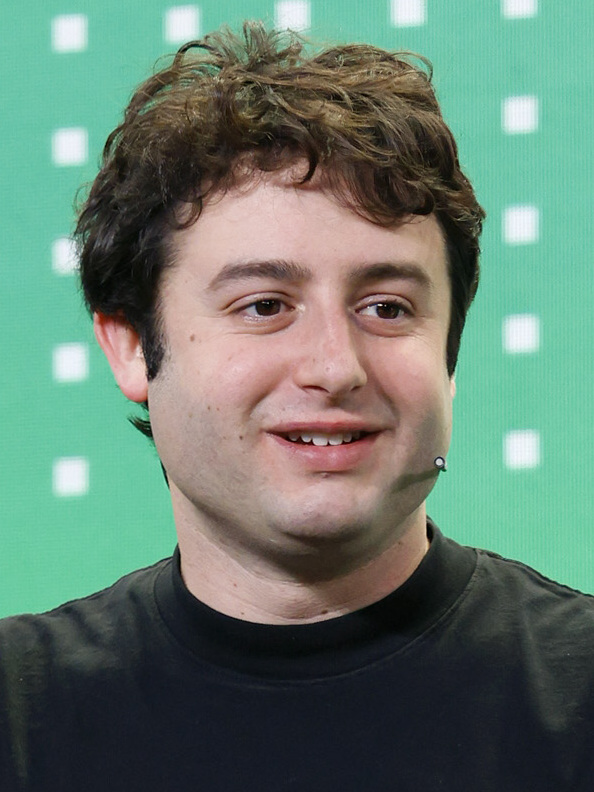
Dylan Field grew up in Penngrove, California, interned at places like Flipboard and LinkedIn, and was studying computer science and math at Brown. There he met Evan Wallace, a quiet, brilliant graphics programmer. In 2012, Field won a Thiel Fellowship — Peter Thiel's program that pays young people $100,000 to drop out of school and build something. Field took the money, left Brown, and convinced Wallace to come west with him after graduation.
The problem: they had the grant and the conviction, but no actual idea. They knew they wanted to build a company together. They had no clue what it would be.
The years of wrong ideas
So they tried everything. Their first serious direction was software for drones — until Wallace, who had built and programmed drones before, talked Field out of it. His reasons were unglamorous and exactly right: hardware has brutally long debug cycles, drones carried regulatory risk, and most drone ideas implied spying on people. They moved on. They built a meme generator. They experimented with a kind of "Photoshop in the browser," with image-cutting and photo-editing tools.
Buried in that last experiment was the real insight. Wallace had figured out how to use WebGL to do serious, high-performance graphics inside a web browser — something everyone assumed was impossible at the time. The question stopped being "what photo tool should we build?" and became "what if professional design tools lived in the browser, like Google Docs, so a whole team could work on the same file at once?" That was Figma: not a feature, but a different operating system for design work.
The stealth years almost broke them
Here is the part most retellings skip. Having the insight didn't make it work. Building a browser-native vector engine that could manipulate complex designs at a smooth 60 frames per second was a genuine feat of low-level systems engineering, and it took years. Figma stayed in stealth from 2012 until its first public release in 2016 — four years with no product to show.
Field was in his early twenties and had never managed anyone. His inexperience showed: leading the small team was hard, raising money on the promise of an unreleased product was harder, and the beta dragged on so long that frustrated employees quit before it ever shipped. For a long stretch, Figma looked less like a future $68 billion company and more like two guys who couldn't finish anything. The thing that carried them through was simply that they didn't stop.
The wedge that turned out to be everything
When Figma finally launched in 2016, the magic wasn't a feature list — it was the link. Instead of emailing design files back and forth and merging changes by hand, a team could open the same Figma file in a browser and edit it together in real time, the way Google Docs had done for writing. Designers, engineers, and product managers could all live in one document. Adobe's tools, built for the desktop era of one designer per file, suddenly looked dated.
Adoption spread team by team, and then the pandemic poured fuel on it: with everyone remote, a collaborative design tool that lived in the cloud went from nice-to-have to essential. By 2021 Figma was valued at $10 billion. The "Google Docs for design" pitch that sounded naive in 2012 had become the standard way modern software gets designed.
The deal that got blocked — and the better ending
In September 2022, Adobe offered $20 billion to buy the company eating its lunch. Field, then 30, agreed. But the deal became a textbook antitrust case: regulators in the UK and EU argued that the dominant incumbent buying its most dangerous challenger would hurt competition, and in late 2023 the companies abandoned it. Adobe paid the agreed $1 billion termination fee, and Figma was suddenly, awkwardly, on its own again.
It turned out to be the best thing that could have happened. Forced to stand alone, Figma kept growing, leaned hard into AI features, and filed to go public. Its August 2025 IPO on the NYSE was one of the largest first-day pops any billion-dollar tech company has ever had — closing near a $68 billion valuation, more than triple Adobe's offer. Field's roughly 9% stake was worth about $6.6 billion. The regulators who blocked the sale, it turned out, may have done him a multibillion-dollar favor.
The lesson
It is tempting to read Figma as an overnight success — Thiel Fellow drops out, builds darling startup, IPOs huge. The truth is the opposite. The drones, the meme generator, the photo editor, the four silent years, the employees who left before launch: none of that was wasted motion around the real company. It was the company being built. The browser-graphics breakthrough that made Figma possible came out of the "failed" photo-tool detour. The conviction to survive a near-empty stealth period is what let them ship at all.
Field's own framing has been consistent: he wasn't trying to add a feature to design software, he was trying to change where design happens. That kind of bet doesn't pay off on a schedule. It pays off only if you can keep going while there's nothing yet to show — which, more than the Thiel grant or the IPO, is the actual skill the Figma story is about.
Sources: Wikipedia — Dylan Field, Fortune — Figma IPO & the Thiel Fellowship, CNBC — From dropout to billionaire, Contrary Research — Figma founding story, Wikipedia — Figma.