Robotics in 2026 Is Running on Two Clocks
If you ask how fast robotics is moving in 2026, you get two honest answers that sound like they contradict each other.
The first is extremely fast. A robot can now watch a single video of a person repotting a plant and do it. One humanoid factory went from building one robot a day to one an hour in under four months. Humanoid funding this year already nearly doubles last year's record.
The second is much slower than the demos suggest. The most-hyped humanoid in America spent most of this year doing no productive work, the home robot you can preorder is largely driven by a person in a VR headset, and one of the leading model builders says plainly that robots aren't ready for your house.
Both are true because robotics is now running on two clocks. The brain is improving at AI speed. The body is shipping at hardware speed. The companies worth watching in Silicon Valley separate out cleanly by which clock they are actually on.
The money is moving at AI speed
Dealroom counts roughly $8.7 billion of venture investment into humanoid robotics so far in 2026, nearly double 2025's full-year record, spread across more than 70 companies competing to build a general-purpose humanoid. Figure AI alone is valued around $39 billion.
That capital isn't flowing because robots got cheaper to build. It's flowing because investors believe the part that was always missing — a general brain — has finally started to work.
What's new: the brain
The real change in the last two years is the robot foundation model: one network, trained on huge amounts of varied data, that generalizes across tasks instead of being programmed for each one. It's the same shift language models went through, applied to motors.
Physical Intelligence (San Francisco) is the purest bet on this. It builds no robots of its own. Its vision-language-action model runs at 3 to 5 billion parameters, takes camera streams and plain-language instructions like "make a flat white," and predicts the next 50 motion steps in about 100 milliseconds. The company says its latest version doubled throughput on tasks like inserting a filter into an espresso machine, folding laundry it has never seen, and assembling a cardboard box. It open-sourced its original π0 model in February 2025, raised a $600 million Series B in November, and is valued around $5.6 billion.
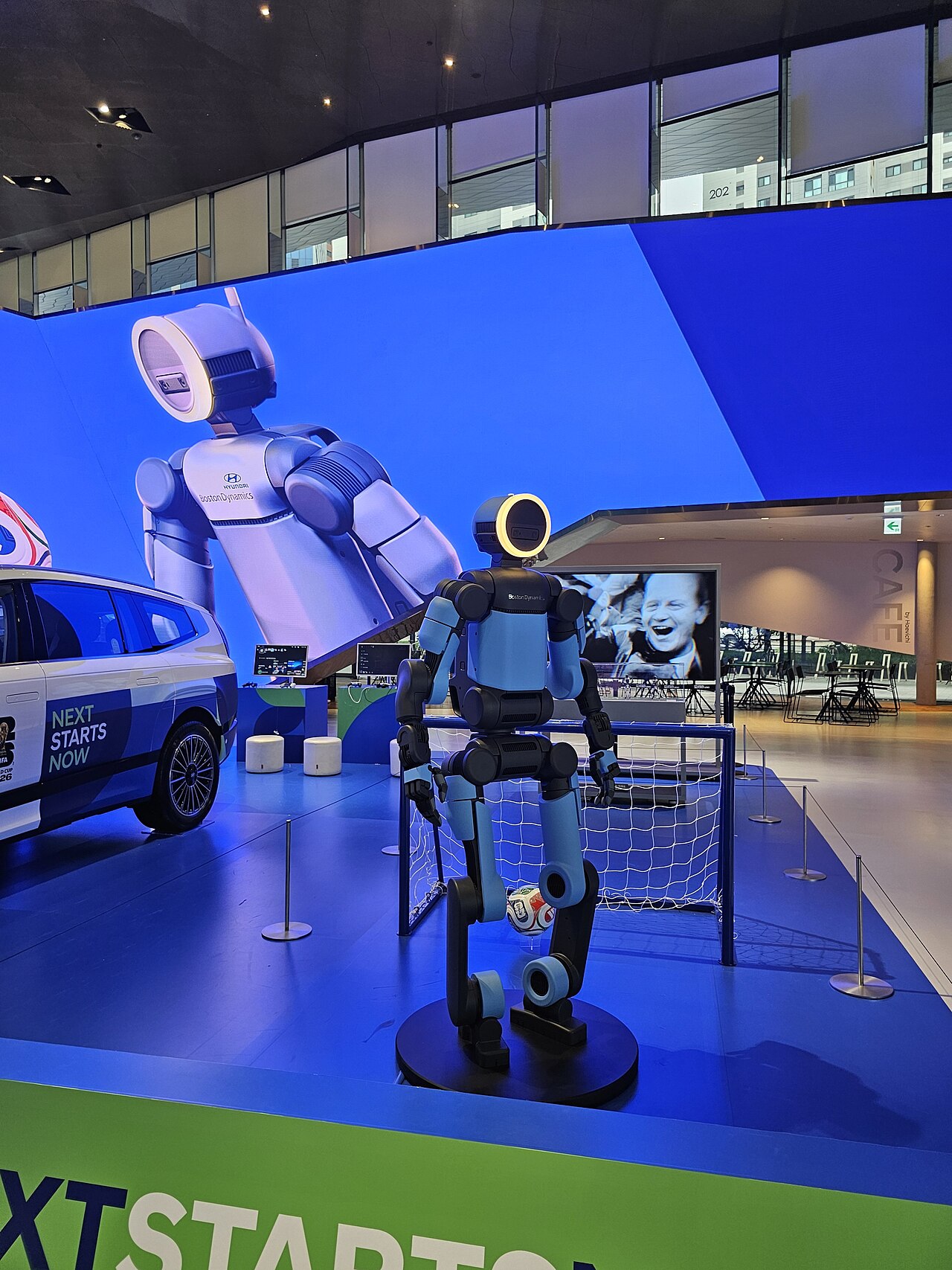
The most striking result of the year came from outside the Valley. On August 31, 2026, Pittsburgh-based Skild AI unveiled S1, which learns a new task from a single video of a human doing it, with no fine-tuning. It handles tasks up to ten minutes long — repotting a plant, making coffee, cooking pancakes — and is "omni-bodied," running on anything from a quadruped to a humanoid to a fixed arm.
The pancake detail is the one to remember. CEO Deepak Pathak said the team searched its millions of hours of training data for any example of flipping and found none. The skill emerged. That is what "AI speed" means here: capabilities that nobody explicitly trained showing up anyway.
What's shipping: the body
Brains are software. Bodies are actuators, batteries, and yield rates, and they move at the speed of a factory floor. This is where the Silicon Valley companies look very different from each other.
Figure AI — the manufacturing story
Sunnyvale-based Figure is the clearest case of a company trying to make the body clock run faster. On April 29, 2026, it reported that its BotQ plant went from producing one Figure 03 per day to one per hour, a 24x increase in under 120 days, with more than 350 robots delivered.
The details in that announcement are more telling than the headline. End-of-line first-pass yield was "over 80% and improving weekly." Every robot goes through more than 80 functional tests before sign-off. That's factory language, not demo language.
The deployment record is real too. Its previous-generation Figure 02 logged over 1,250 hours at BMW's Spartanburg plant, loading more than 90,000 parts toward the production of over 30,000 BMW X3s. In May it signed its first retail-logistics customer, Catalyst Brands, the owner of JCPenney and Aéropostale.
1X — the home robot, with a person inside
Palo Alto-based 1X is betting on the living room. Preorders for its NEO humanoid opened on October 28, 2025, at $20,000 or $499 a month, and it now builds robots at a factory in Hayward.
The honest caveat is autonomy. When the Wall Street Journal's Joanna Stern tested NEO, most tasks were teleoperated by a human wearing a VR headset. 1X is upfront that early customers' homes will generate the training data that makes NEO autonomous over time. That can work — it's how the brain clock gets fed — but it means today's NEO is partly a remote-control robot, and you should buy it knowing that.
Tesla Optimus — the gap between the two clocks
Optimus is the cleanest example of what happens when predictions run on the brain clock and production runs on the body clock.
In January 2025, Elon Musk predicted roughly 10,000 Optimus robots that year. Tesla missed that entirely. In January 2026, Musk said zero Optimus robots were doing useful work in Tesla's factories. The Gen 3 reveal, originally expected in the first quarter of 2026, slipped to "probably middle of this year." Tesla shut down its Fremont Model S and X line in May to convert it for Optimus, and gave no production target for 2026.
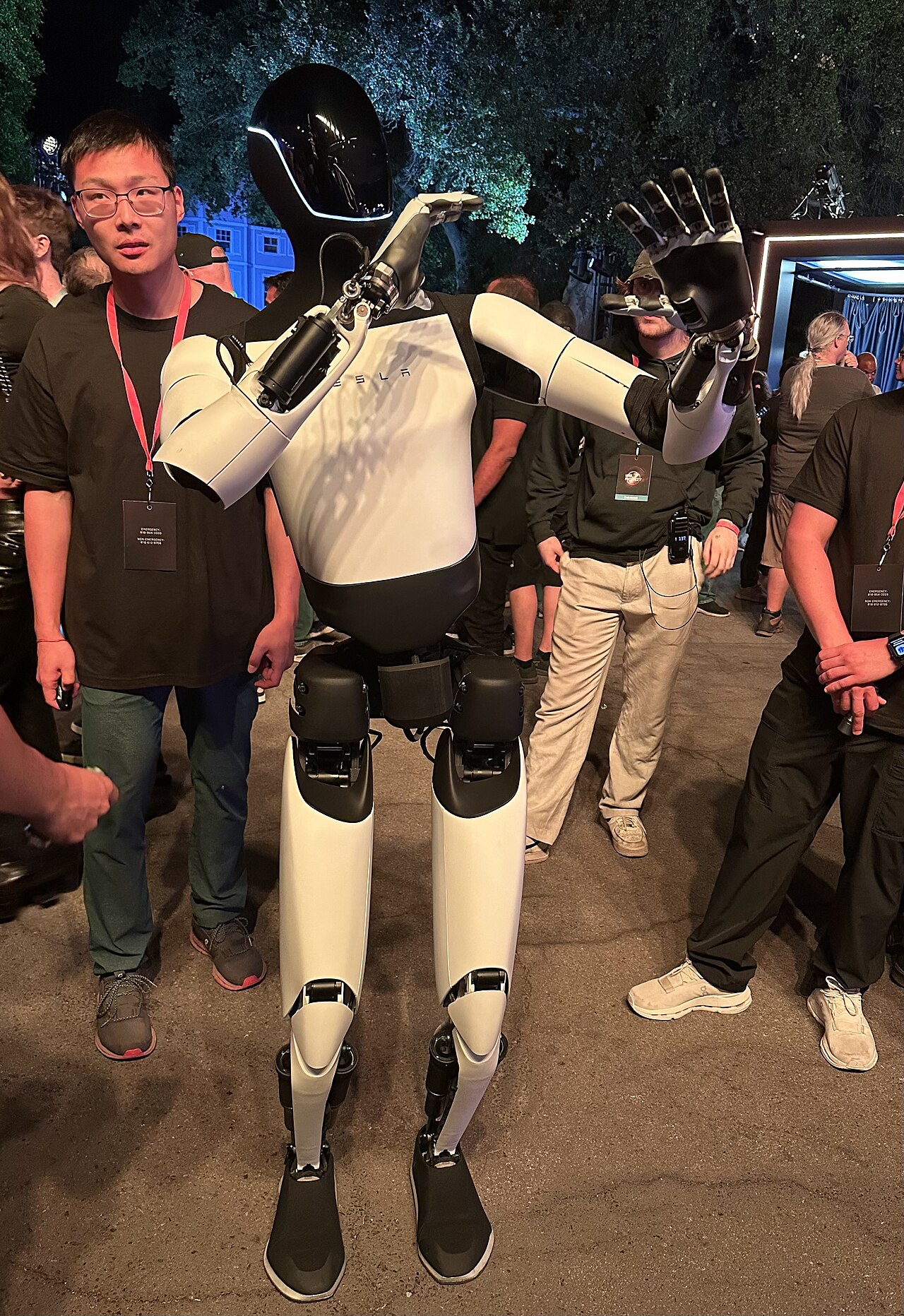
None of that means Optimus won't work. Tesla knows how to build hardware at scale better than almost anyone. It means the timeline on stage and the timeline in the factory are measured in different units.
How to tell which clock you're looking at
The single most useful question to ask about any robot demo in 2026 is: who was driving? Teleoperation is not cheating — it's how you collect the data that trains the brain. But a teleoperated demo tells you what the body can do, not what the brain can do, and the two are advancing at very different rates.
A few other tells worth watching:
- Hours, not videos. Figure's 1,250 hours at BMW means more than any highlight reel. Cumulative deployed runtime is the metric that's hard to fake.
- Yield, not units. An 80% first-pass yield is honest and still improving. It also means one in five robots comes off the line needing rework.
- Who says "not yet." Skild's CEO, sitting on one of the year's best results, still says robots aren't ready for homes. When the people with the strongest models are the most cautious, that's the signal.
What this means if you build software
The brain side of robotics now looks a lot like the rest of AI: foundation models, in-context learning, data flywheels. That means the skills transfer. Evaluation, data pipelines, and knowing when a model is actually generalizing versus memorizing are exactly the problems these companies are hiring for.
The body side does not transfer, and it is the one setting the real pace. The next two years of robotics will be decided less by who has the smartest model than by who can close the gap between the two clocks — turning a brain that learns from one video into a body that ships at one an hour, with nobody in a VR headset behind it.
Sources: Figure AI, "Ramping Figure 03 Production"; The Robot Report on Skild AI's S1; The Robot Report on Physical Intelligence's Series B; Electrek on Optimus production; 1X Technologies; Tech Funding News and Dealroom on humanoid funding.