What Astra Actually Changed About Game Development
When GPT-6 Astra launched on September 3, 2026, I wrote that its coding numbers were flat — about 1.4 points over its own predecessor on the benchmark that tracks real developer work most closely. Meanwhile its computer-use numbers jumped hard. At the time that looked like a disappointment for developers.
Two weeks later the game development demos started landing, and the gap makes sense. Astra didn't get much better at writing code. It got much better at operating software. Game development is the discipline where that distinction is worth the most, because making a game was never mostly a typing problem.
The number that explains everything else
On OSWorld 2.0 — a benchmark of real tasks performed by driving actual desktop applications — Astra scored 72.6%, against 65.7% for Sol before it. More striking than the accuracy is the clock: roughly 40 minutes per task versus about 75. Nearly twice as fast at sitting in front of software and using it.
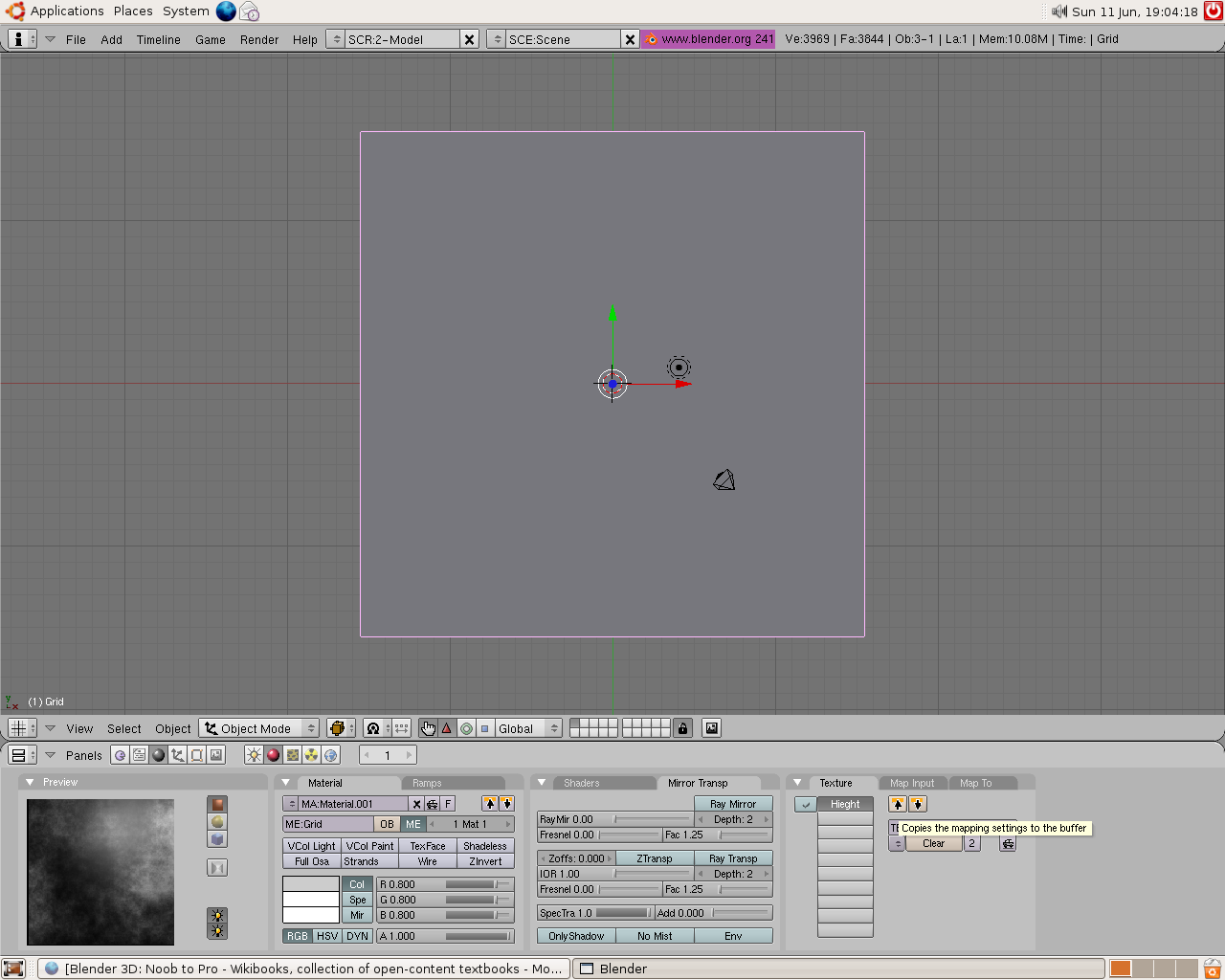
Now think about what a day of game development actually consists of. Modeling in Blender. Dragging things around a scene hierarchy. Setting import options. Wiring a material. Hitting play, watching the thing fall through the floor, and going back in. Very little of that is authored as text. Almost all of it is clicks in a GUI, followed by looking at the result.
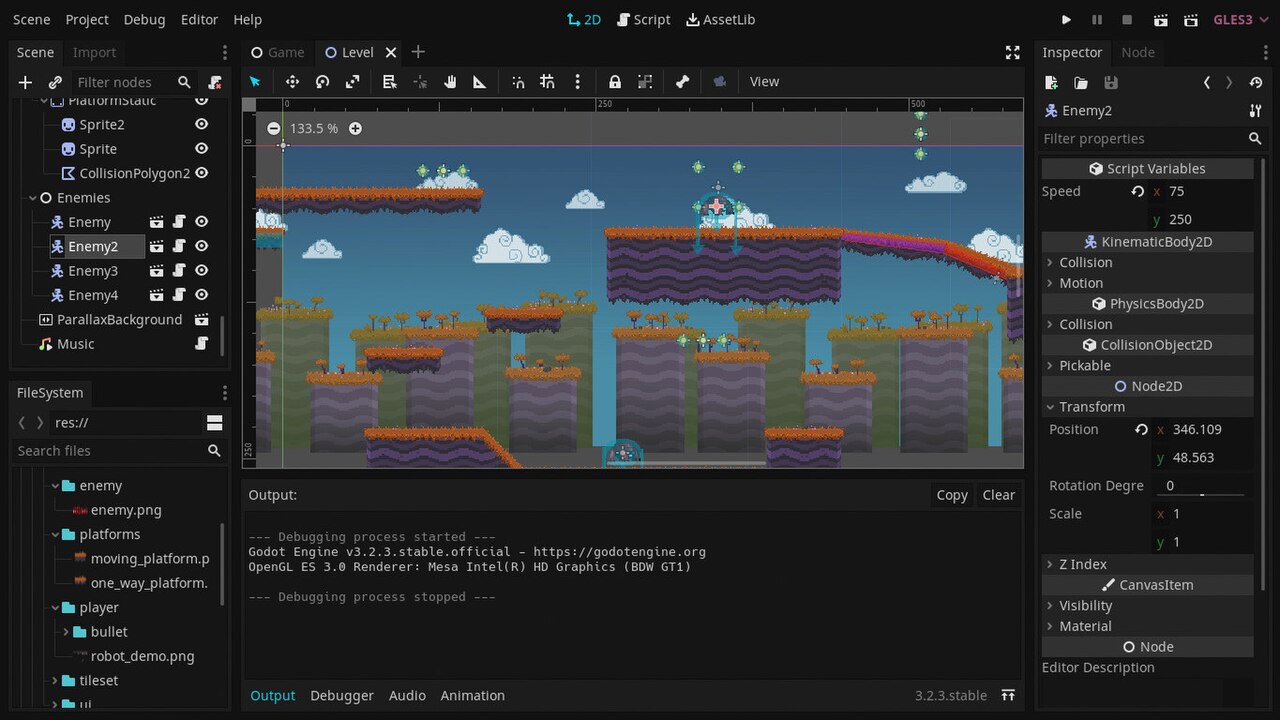
A model that is 1.4 points better at writing a function does nothing for that. A model that is twice as fast at correctly operating an unfamiliar GUI changes the job.
What that bought in practice
The most concrete evidence is from Playco, a game studio that used Astra to build Playbot, an AI-powered IDE for professional game developers. Playbot connects directly into engines like Unity and Godot so the model can edit scenes, play and test the game, validate its own changes, and work in parallel inside the tools developers already use.
Their reported result: three themed prototypes built from a single grey-box foundation, most working on the first take, with roughly 50% fewer manual fixes.
Other demos from the same window:
- A Sonic-style 3D game in Godot — 53 minutes on Astra Max, 25 minutes on Medium.
- A Three.js space explorer generating 2,048 star systems and over 10,000 planets.
- An FPS improved autonomously in 28 minutes: 20 files modified, 80 automated checks passed.
Reported gains also showed up in the soft stuff that used to be stubbornly human — spatial reasoning, reproducing a reference image, game UI, and what practitioners call game feel.
The actual unlock is the loop, not the output
If you only take one thing from this: the interesting change is not that Astra can generate a game. It's that it can create → look at what it made → play it → notice what's wrong → fix it, without a human operating the tools between each step.
That closes the loop that every previous generation of coding assistant left open. The old failure mode wasn't bad code — it was a model producing something plausible with no way to see that the character was clipping through geometry. Playtesting was the human's job because looking at a running game was the human's job.
Once the model can drive the editor and watch the result, iteration stops being gated on a person. That's also why the Playco number is about manual fixes rather than lines of code. The savings aren't in authorship. They're in not being the one who has to notice.
Where it stops
The demos are real. The extrapolation people are doing from them is not. Four things are worth holding onto:
- A prototype is not a shipped game. The evidence is three prototypes. There is no data on multiplayer, long-running production, console certification, or post-launch support — the parts that consume most of a real project's calendar.
- "First take" was doing some work in that sentence. In Playco's own showcase, one cyberpunk prototype still needed a performance fix. First attempt did not mean production-ready.
- The numbers don't transfer between engines. The quantitative results were primarily measured on the Unity side; they do not establish the same outcome in Godot, and the Godot demos weren't measured the same way.
- It's one vendor-published case study. The 50% figure comes from a single workflow at a studio building a product on top of the model, published by the model's maker. That's not independent testing across genres and engines.
Performance is the honest tell. Astra scores 95.9% on BenchCAD geometry reconstruction, which is genuinely impressive and says nothing about whether it can hold 60fps in a busy scene. Larger scenes, physics, networking, and platform limits are a different class of problem than "build the grey box," and that is exactly where the one acknowledged failure showed up.
What this means if you're small
The useful reframing is about cost per discarded idea. If a prototype takes a week, you test the two concepts you already believe in. If it takes an afternoon, you can test the ones you think are probably bad — and being able to cheaply falsify your own ideas is worth more than throughput.
Two caveats from my own experience building with agents. First, none of this works ambiently: Playco's results came from Playbot, purpose-built plumbing between the model and the engine. Astra needs external structure to be good at this, and someone has to build that structure. Second, the bottleneck moves rather than disappears. Generating ten prototypes in a week means evaluating ten prototypes in a week, and taste doesn't get a speedup.
Which lands in the same place as Jensen Huang's GitHub merge numbers: the generating got faster, the judging did not. In game development that's actually good news, because judging whether something is fun was always the part that mattered.
Sources: OpenAI on Playco's prototyping results; npaka's breakdown of Astra across Unreal, Unity, Godot and Three.js; SoonLab's critical review; MindStudio's workflow write-up.