SpaceX IPO listing news and Starship V3 12th test flight success
There was only one hot topic in the market last weekend: SpaceX.
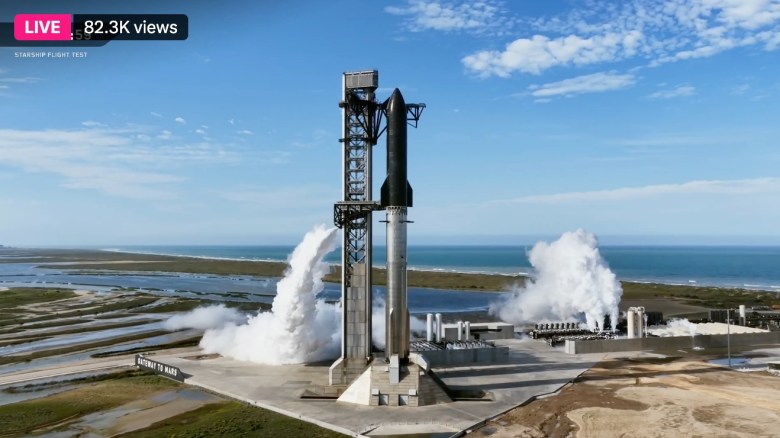
With the public submission of S-1 to the SEC on May 20, listing under the ticker SPCX and Nasdaq became official, and two days later, on May 22, the next-generation launch vehicle Starship V3 took off from Starbase in Texas and made a controlled splashdown in the Indian Ocean. This flight, which Musk himself described as an “epic launch and landing,” was significant in that it was not just a test but the final technology verification before the IPO.
The key schedule can be summarized in one line as follows. Subscription on June 11th, Nasdaq debut on June 12th.
The market's target market capitalization is expected to be between $1.75 and $2 trillion, making it the largest IPO ever, surpassing Saudi Aramco ($1.7 trillion) in 2019. The public offering size alone is up to $75 billion, which is about 2.5 times the size of Aramco's $29 billion.
Test launch and resolution of technology doubts
Even though one of the six upper engines failed, V3 reached the cruise phase and succeeded in sequentially deploying 20 Starlink model satellites and 2 real satellites. What was more impressive was the re-entry phase. It went through a maneuver that intentionally applied maximum stress and ended with a controlled descent, which was a meaningful validation given that NASA's lunar lander mission relies on V3.
From an investor's perspective, it's like this. “Technological uncertainty,” which was the biggest risk remaining in the IPO success, has disappeared.
The market is effectively interpreting this flight as the “final trigger” of SPCX listing, and the fact that domestic and foreign aerospace stocks jumped all at once on May 26, the first trading day immediately after, is proof of this.
bullish and bearish
Let's look at the good side first. Starlink is already a cash cow.
In 2025, it posted sales of $11.4 billion and operating profit of $4.4 billion. With an operating profit margin of around 38%, it can be said to be the standard for a subscription business. The launch market share is also overwhelming. It accounts for about 85% of U.S. orbital launches and the majority of global commercial launches, with multi-year contracts lined up with NASA, DoD, and major satellite operators.
However, if you look at the consolidated financial statements, the story is different.
Net loss in 2025 is $4.94 billion, and 1Q26 has a single quarter loss of $4.28 billion.
Sales grew 33% to $18.7 billion, but the integration of xAI and One investor's comment best sums up this challenge: "Does it make sense for a $2 trillion company to be in the red?"
Valuation is more burdensome. PSR is 93 times. Considering that the S&P 500 average is 3 times and the Nasdaq 100 is 5 times the average, it is comparable to the dot-com peak. The EBITDA multiple is a whopping 300x. In addition, Musk holds 85.1% of the voting rights, adding to the governance structure in which he holds the positions of CEO, CTO, and board chairman alone.
Sources :
- SpaceX S-1 공식 신고 (CNBC)
- SpaceX IPO 분석 (Axios)
- Starship V3 12차 비행 성공 (Space.com)
- Starship V3 NPR 보도
- SpaceX 강·약세론 (Yahoo Finance)
- SpaceX IPO Bull/Bear (TMB)
- Rocket Lab +57% (Motley Fool)
- 우주주 동반 랠리 (24/7 WallSt)
- 국내 우주항공 수혜주 (FoxCG)
- 한화에어로·KAI·켄코아 (머니투데이)
- 국내 SpaceX 관련주 (Money Magazine)
- ARKX 집중도 우려 (24/7 WallSt)
- Benzinga "initial pop" analysis